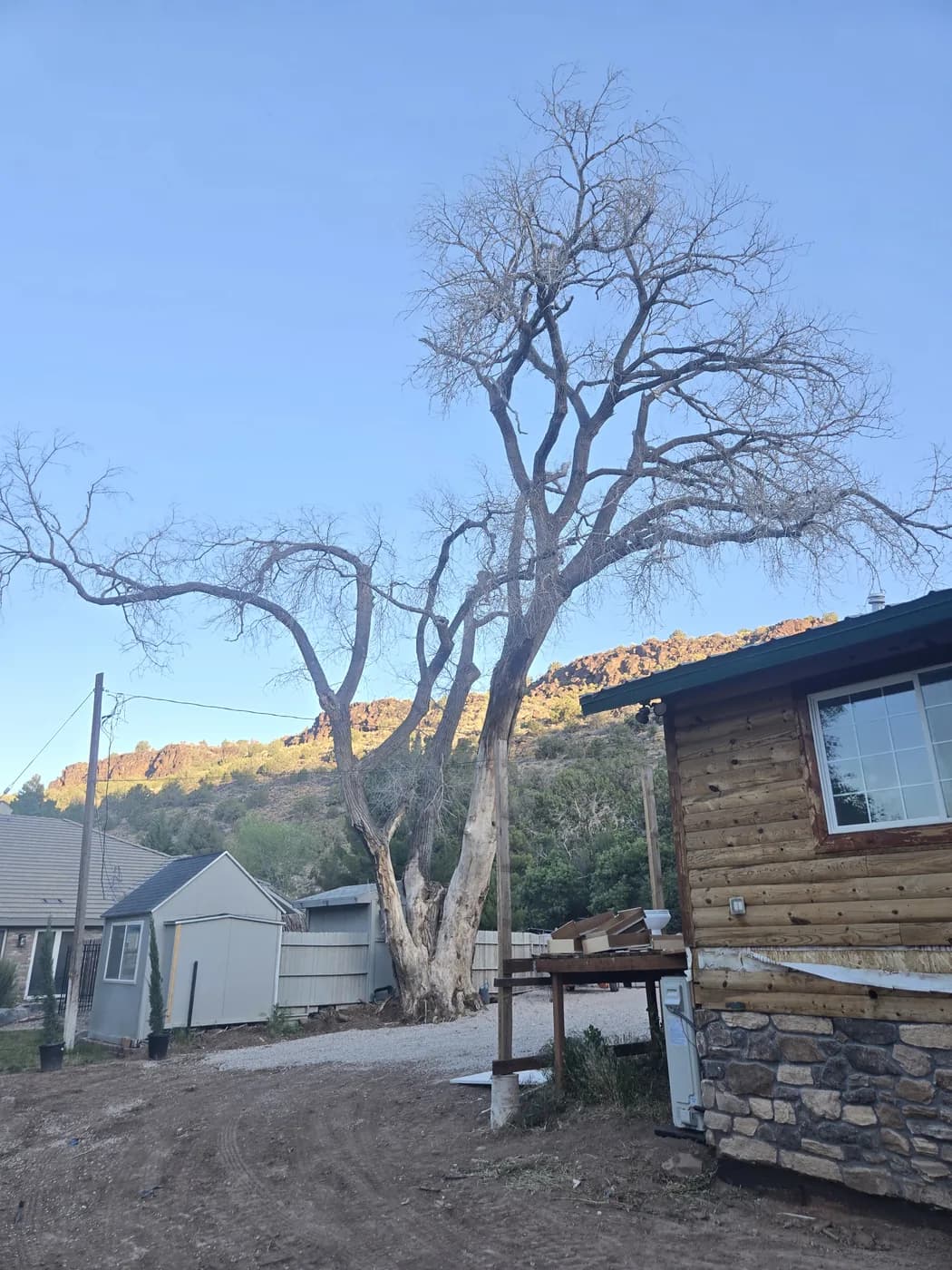
Southern Utah
Tree Health Diagnostics
Why is my tree dying, and is it worth saving?
Southern Utah
Why is my tree dying, and is it worth saving?
The work
This is the arborist service. Before anyone sells you a removal or a treatment, somebody should work out what is actually wrong. Sometimes it is a pest. More often around here it is soil, water or how the tree was planted.
On site assessment of the tree, the soil and the irrigation around it
Iron chlorosis, the yellow leaf with green veins that alkaline soil causes here
Watering problems in both directions, because overwatering looks a lot like drought
Borers, dieback, girdling roots, trunk damage and trees planted too deep
A straight answer on whether the tree is worth keeping
Around here specifically
Alkaline soil is the background condition for everything in this valley. The Southern Utah tree guide flags species by iron sensitivity for exactly that reason, and a lot of what looks like a dying tree is a tree that cannot take up the iron already in the ground.
What we will tell you
Sometimes the answer is that the tree is finished and no amount of money changes that. We would rather tell you that than sell you three seasons of treatments first.
Questions we get
That pattern is usually iron chlorosis, and it is extremely common here because our soil is alkaline and locks the iron up where the tree cannot take it. It is a soil problem more than a tree problem, and some species are far more prone to it than others.
We can assess the tree and tell you what we see. If the situation calls for a formal tree risk assessment, we will tell you that too rather than guess.
Where we do it
Tell us what you are looking at. We will come out, take a look, and tell you what we would do and what it costs. No job is too big or too small, we do it all.